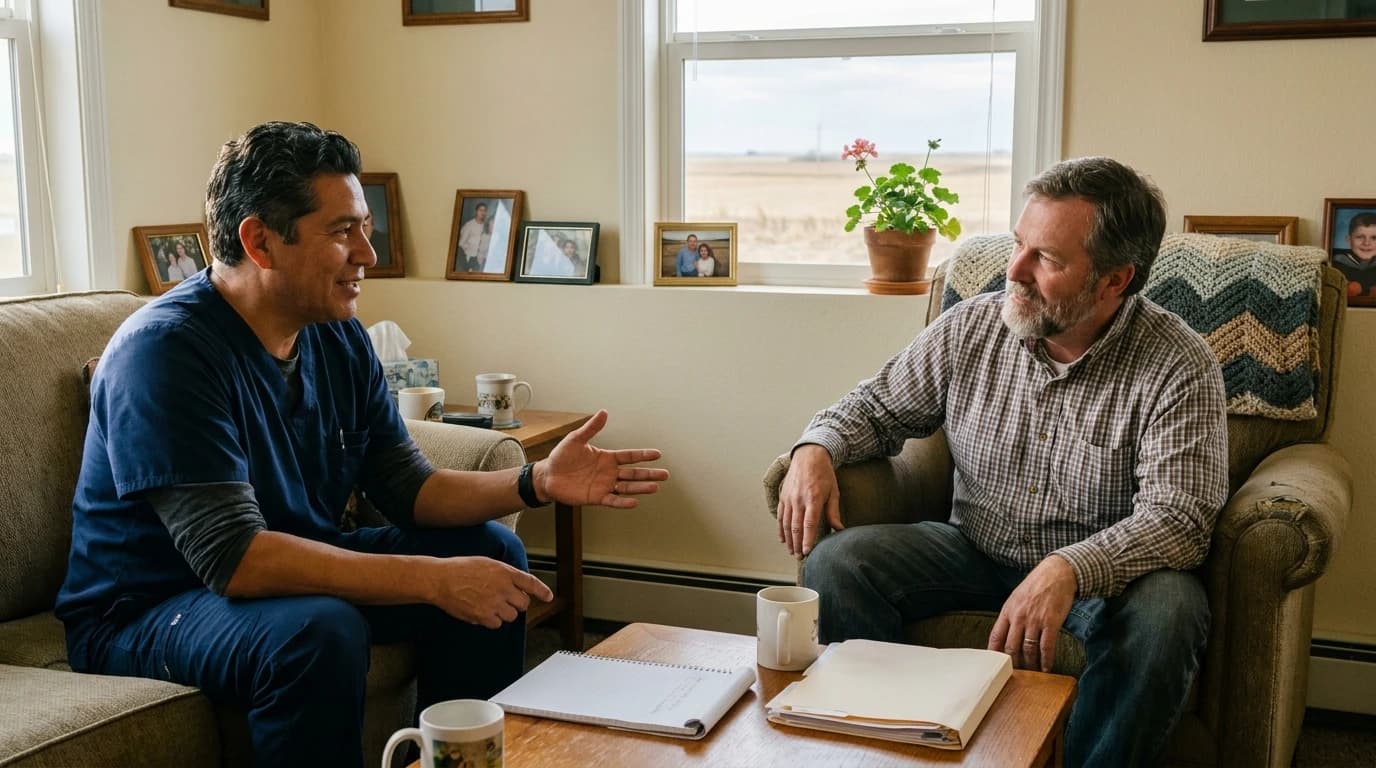
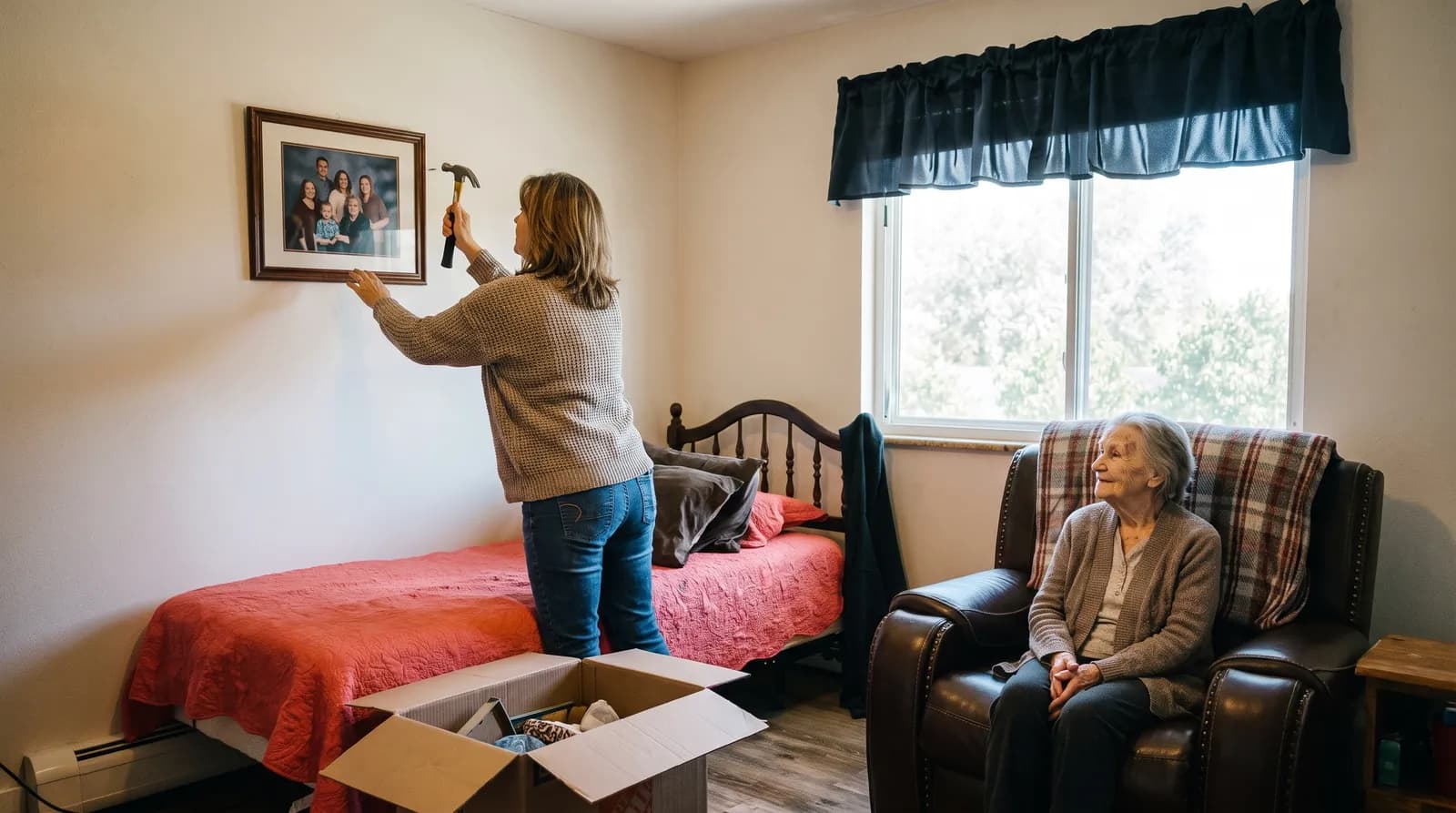
Moving In: What the Process Actually Looks Like
From deciding yes to actually settled: the conversation about care, the paperwork in plain terms, choosing a home, what to bring, move-in day itself, and what the first thirty days really feel like.
Category
Practical advice for adult children navigating senior care decisions for their aging parents.

From deciding yes to actually settled: the conversation about care, the paperwork in plain terms, choosing a home, what to bring, move-in day itself, and what the first thirty days really feel like.

The signs families notice first are rarely dramatic: a thinning fridge, a pill organizer that doesn't add up. Here's what to look for in your parent and in yourself, and when it can honestly wait.

Needs rarely stay still. Here's how care levels work, how changes get noticed, what can be handled in place as care increases, and why hospice usually doesn't mean moving again.

Assisted living solves a care problem. It isn't a housing program, a financial rescue, or a substitute for medical treatment. A nurse-owner explains what it does and doesn't fix, and names the free help that exists when it isn't the right answer.

The difference comes down to one question: does your parent need medical care around the clock, or help with daily living? A nurse-owner explains how to tell — and what to do when you're not sure.

When a parent goes on hospice, the focus turns fully to comfort — and they may start to act differently. A nurse explains what those changes mean and how to be present for them.