Assisted Living or Nursing Home? How to Tell What Your Parent Really Needs
The difference comes down to one question: does your parent need medical care around the clock, or help with daily living? A nurse-owner explains how to tell — and what to do when you're not sure.
By Parul Darji, RN

Here's the short answer: a nursing home is for people who need skilled medical care around the clock. Assisted living is for people who need help with daily living — bathing, dressing, medications, meals — in a place that still feels like home. Most families who call me thinking they need one actually need the other, and the difference matters for your parent's happiness and your family's budget.
I'm Parul Darji, a registered nurse, and I own and run Aspen Leaf Assisted Living Residence — four small homes on Colorado's Eastern Plains, in Flagler, Stratton, and Limon. Families sit across from me with this exact question every month. Here's how I help them answer it.
What's the real difference between assisted living and a nursing home?
The difference is the level of medical care, not the quality of care.
A nursing home — the formal term is skilled nursing facility — has licensed nurses on duty around the clock and is built for complex medical needs: IV therapy, serious wound care, feeding tubes, and rehabilitation after a hospital stay. It tends to feel more like a hospital, because in many ways it works like one.
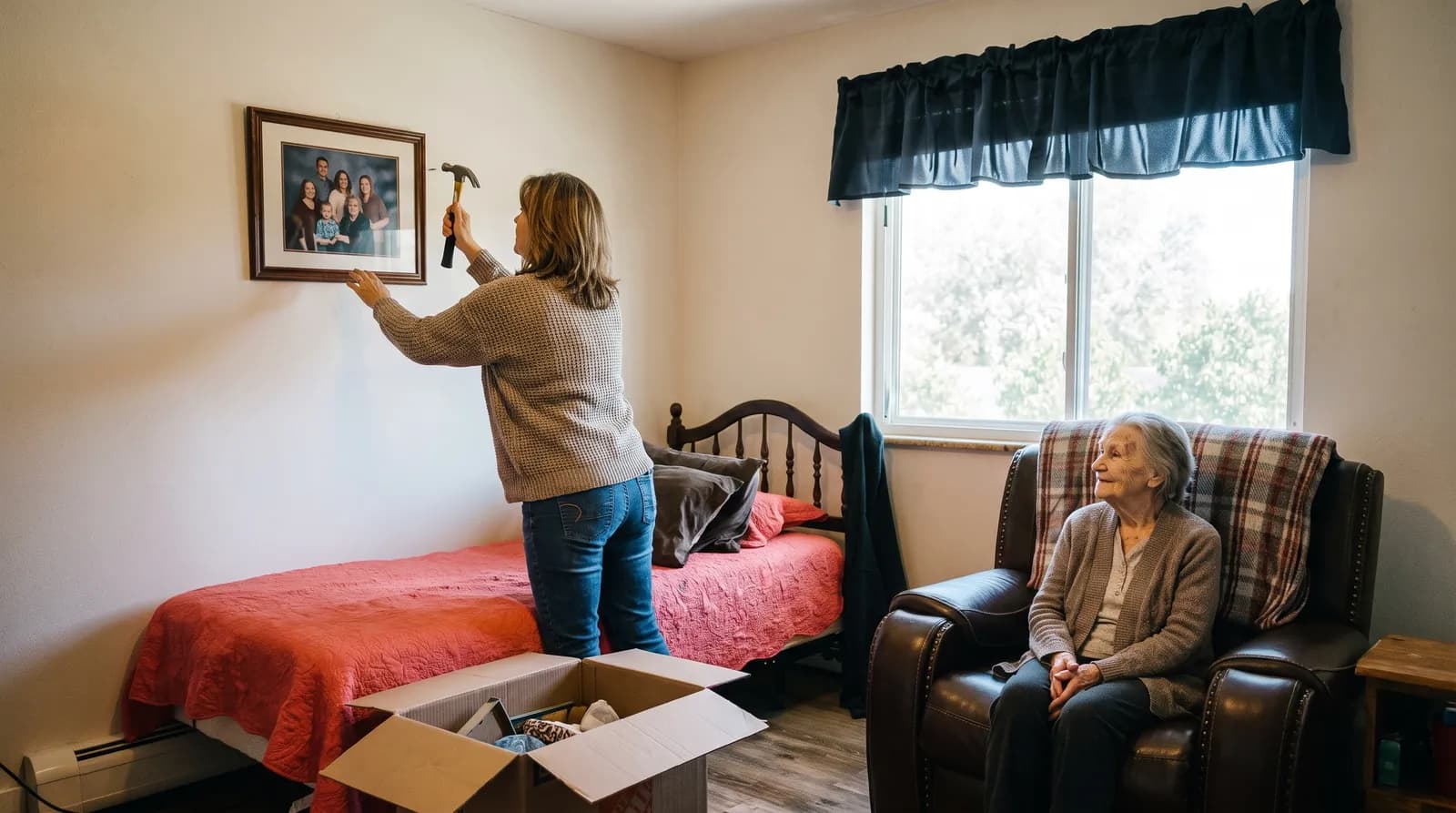
Assisted living is a home first. Residents have their own rooms, shared meals, and staff available day and night for personal support — but nobody is receiving hospital-level treatment down the hall. In our homes, the rhythm of the day looks like a family's: home-cooked meals, conversation, activities, quiet afternoons.
What can assisted living actually handle?
More than most families expect. A diagnosis — early dementia, diabetes, arthritis, a fall history — does not automatically mean a nursing home. At our homes, assisted living includes:
- 24/7 staff on-site, every day of the year
- Medication management by QMAP-certified staff (Colorado's medication administration certification)
- Personal care: bathing, dressing, grooming
- Three home-cooked meals a day, served family-style
- Housekeeping and laundry
- Nurse oversight — I'm an RN, and I oversee care in all four of our homes
What assisted living is not built for is ongoing skilled medical treatment. That line is the honest answer to the whole question.
When is a nursing home the right choice?
I tell families a nursing home is the right call when their loved one needs:
- Daily skilled nursing care — IV medications, complex wound care, or conditions that need a nurse's monitoring every day
- Short-term rehabilitation after surgery or a hospital stay (this is the one situation where Medicare typically helps, for a limited time)
- A level of physical care beyond what a small home's staff can safely provide
None of that is a failure or a downgrade — it's matching the care to the need. And needs change: some people rehabilitate in a nursing home after a hospital stay, then move to assisted living once they're stable.
What if you're not sure which one your parent needs?
Ask the community to be honest with you — and pay attention to whether they are.
When a family's answers raise questions about fit — needs that sound heavier than assisted living can safely handle — I take a closer look before saying yes. And when a nursing home or another setting is truly the better fit, I say so and point the family in that direction. Filling a room with someone we can't care for well isn't care, and it isn't fair to the resident or the family.
Wherever you tour, ask directly: "Given everything I've told you, can you safely care for my mother — and will you tell me if that changes?" A good community answers plainly.
How do the costs compare in Colorado?
Because nursing homes staff skilled nurses around the clock, they generally cost significantly more than assisted living. Assisted living costs vary by region and pricing model — I've written a full breakdown of what assisted living costs in Colorado, including why our Eastern Plains homes run well below Denver and Colorado Springs rates.
On payment: Medicare does not pay for long-term care in either setting — and it never pays for assisted living room and board. Families typically use private funds, Long-Term Care insurance, VA benefits, or — for those who qualify — Colorado's Medicaid HCBS waiver, which exists precisely to help people who might otherwise need a nursing home get care in a community setting instead. All four of our homes accept it.
How do you decide from a hundred miles away?
Many of the sons and daughters I work with live in Denver, Colorado Springs, or out of state. My advice is always the same: make the drive once, and tour. If you're starting from zero, my plain-language guide to what assisted living is is a good first read — then come see a home in person. Watch how staff talk to residents. Ask the hard questions about fit. You'll know more in thirty minutes than in thirty browser tabs.
Our four homes are in Flagler, Stratton, and Limon (our 6th Street and Circle Lane homes) — all just off the I-70 and Highway 24 corridors, an easy drive from the Front Range.
If you're weighing this decision right now, schedule a tour or call the home nearest you. Tell me what's really going on with your mom or dad, and I'll give you an honest answer about what they need — even if the answer isn't us.
Parul Darji, RN — Owner & Administrator, Aspen Leaf Assisted Living Residence. Serving families in Flagler, Stratton, and Limon, Colorado.
Frequently asked questions
- What's the difference between assisted living and a nursing home?
- The level of medical care. A nursing home (skilled nursing facility) provides round-the-clock skilled medical care for complex conditions and rehabilitation. Assisted living provides a home with daily personal support — help with bathing, dressing, medications, and meals — for people who don't need a nurse at the bedside all day.
- Who should choose a nursing home instead of assisted living?
- Someone who needs daily skilled nursing — things like IV therapy, complex wound care, or round-the-clock medical monitoring — or short-term rehabilitation after a hospital stay. If the need is help with daily living rather than ongoing medical treatment, assisted living is usually the better fit.
- Does Medicare pay for assisted living or nursing homes?
- Medicare does not pay for assisted living room and board. It can cover a limited, short-term rehabilitation stay in a skilled nursing facility after a qualifying hospital stay, but it does not pay for long-term care in either setting. Families typically use private funds, Long-Term Care insurance, VA benefits, or Medicaid programs.
- Can my parent move from assisted living to a nursing home later if their needs change?
- Yes. Many residents live in assisted living for years, and if medical needs eventually grow beyond what the home can safely provide, a good community helps the family transition to skilled nursing. Ask any community you tour how they handle changing needs.
- How do I know if my parent is a good fit for assisted living?
- Talk through their actual daily needs with the community, honestly. When a family's answers raise questions about fit, I take a closer look — and if a nursing home or another setting would serve their loved one better, I tell them so and point them in the right direction.