When a Parent Enters Hospice: What Changes, and How to Be There
When a parent goes on hospice, the focus turns fully to comfort, and they may start to act differently. A nurse explains what those changes mean and how to be present for them.
By Parul Darji, RN

When a doctor says it's time for hospice, most families hear the word as an ending. I want to offer you a gentler and more accurate way to understand it: hospice means the focus of care turns fully to your parent's comfort, peace, and dignity for whatever time is left. As a nurse who has walked beside many families through this, I can tell you the care doesn't stop. In many ways, it deepens.
I'm Parul Darji, a registered nurse, and I own and run Aspen Leaf Assisted Living Residence. Our four small homes sit on Colorado's Eastern Plains, in Flagler, Stratton, and Limon. This is one of the hardest seasons a family walks through, and no article makes it easy. But knowing what to expect can take away some of the fear. Here's what I tell the families in our care.
What does it mean when a parent goes "on hospice"?
Hospice means the focus turns fully to comfort: keeping your parent free of pain, calm, and cared for, with peace and dignity as the whole goal. It's usually recommended when a doctor believes someone likely has about six months or less. But hospice is not "giving up." It's choosing to spend the remaining time on quality and peace. Many families tell me afterward that it was the most tender, connected time they had with their parent.
What changes about your parent's care?
When a parent is on hospice, the care itself shifts toward comfort. In our homes, that looks like:
- Comfort comes first. Everything is aimed at easing pain, anxiety, and troubled breathing, so your parent stays as peaceful as possible.
- The same familiar faces. Your parent isn't handed off to strangers. The caregivers who already know her (her name, her stories, how she takes her coffee) are the ones who care for her through this, with no move to an unfamiliar place.
- A hospice team comes in. They join the caregivers your parent already knows, so hospice adds to her care without replacing anyone familiar.
- The family is included. We keep you close and informed, so you're never left guessing what's happening or how to help.
As a nurse, I stay personally involved in these decisions, and we work closely with your parent's doctor to keep them comfortable. Comfort medications are ordered, given and documented the same careful way everything else in the medication system is. The goal is simple: your parent stays in the home they know, cared for by people who know them, right to the end.
How might my mom act differently on hospice?
This is the question families ask me most, usually in a worried whisper: why is she acting so different? The honest answer is that as the body slows down near the end of life, behavior changes. Most of what you'll see is normal, not a sign of pain or neglect. Commonly, families notice a parent who:
- Sleeps much more, and is harder to wake
- Eats and drinks less, or loses interest in food entirely
- Withdraws: talks less, turns inward, seems "somewhere else"
- Becomes confused or restless, sometimes speaking to people who aren't there
- Breathes differently: slower, or in an irregular rhythm
Every person is different, and your parent's doctor and our team can tell you what each change means for your parent specifically. But please hear this: when your mom sleeps all afternoon or stops making conversation, she is usually not slipping away from you. Her body is doing quiet, natural work, and she can very often still feel your presence.
Why is she sleeping so much and not eating?
Because her body simply needs far less now. Near the end of life, the body requires little food and little energy, and deep sleep becomes its natural state. This is one of the hardest things for families to accept: feeding someone we love is how we care for them, and it feels wrong to stop.
But at this stage, pushing food or fluids can actually cause discomfort rather than comfort. Letting your parent rest, and offering small sips or bites only if they want them, is its own act of love. Lean on your parent's doctor and our team here; we'll guide you on exactly what helps and what doesn't. You are not failing her by letting her rest.
Can my parent stay in their assisted living home during hospice?
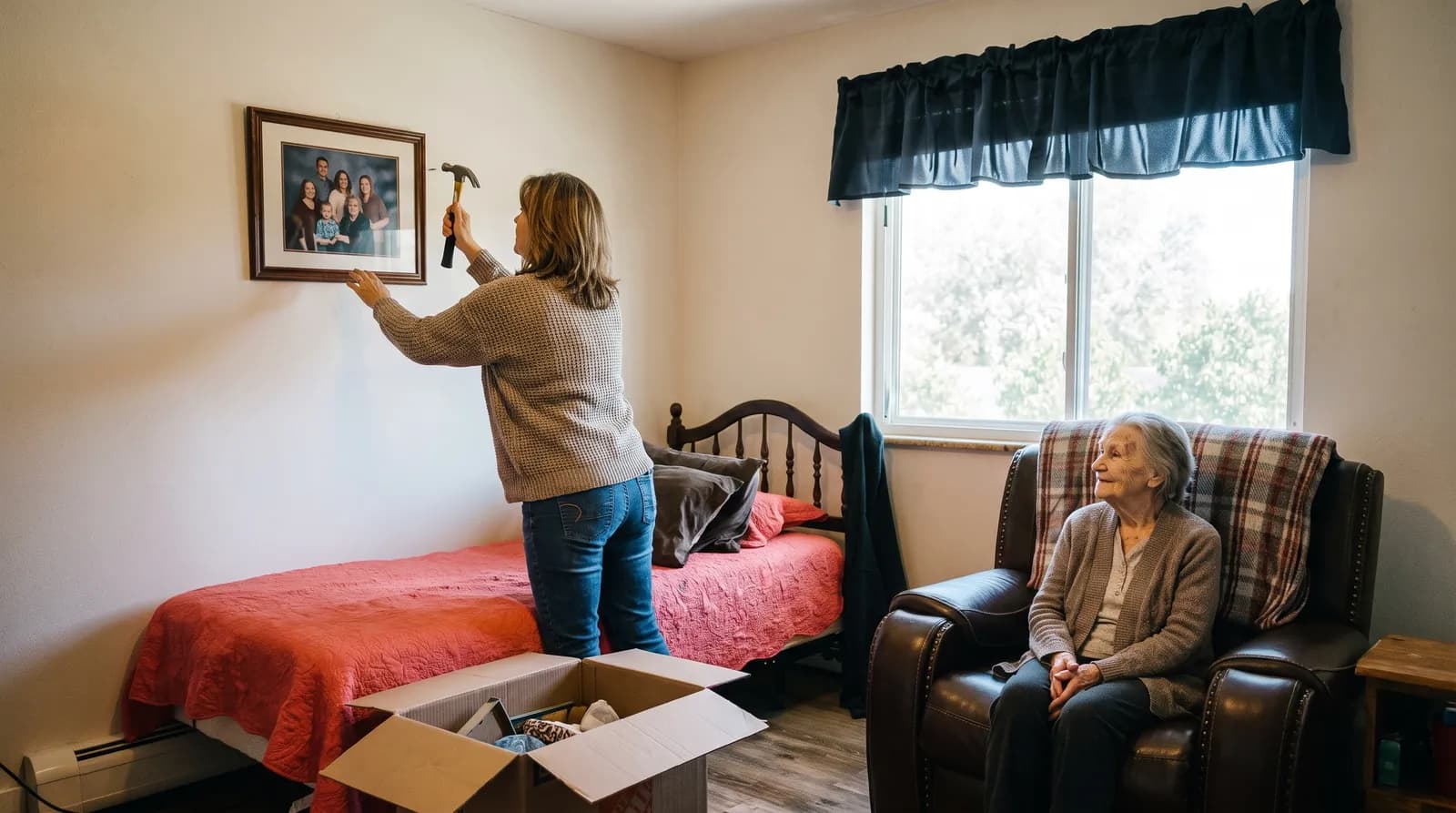
Often, yes, and I think this matters enormously. In many cases, a resident can remain in the small home they already know, cared for by the same caregivers who know their name and their story, right through the end of life. That means your mom doesn't have to be moved to an unfamiliar place at the most vulnerable time of her life. She stays home, in the same daily rhythm she already knows, with the same people in it.
I'll always be honest with families, though: sometimes needs grow beyond what a residential home can safely provide, and a higher level of care becomes the kinder, safer choice. Most increases in need are handled in place rather than by moving, but not all of them. I wrote about where that line sits, and what usually happens instead of a move. When a family's situation raises that question, we look at it carefully and decide together, with you and your parent's doctor, what truly serves your loved one best. If you're weighing what level of care fits, my guide to assisted living versus nursing home care may help you think it through.
How can I actually be there for her?
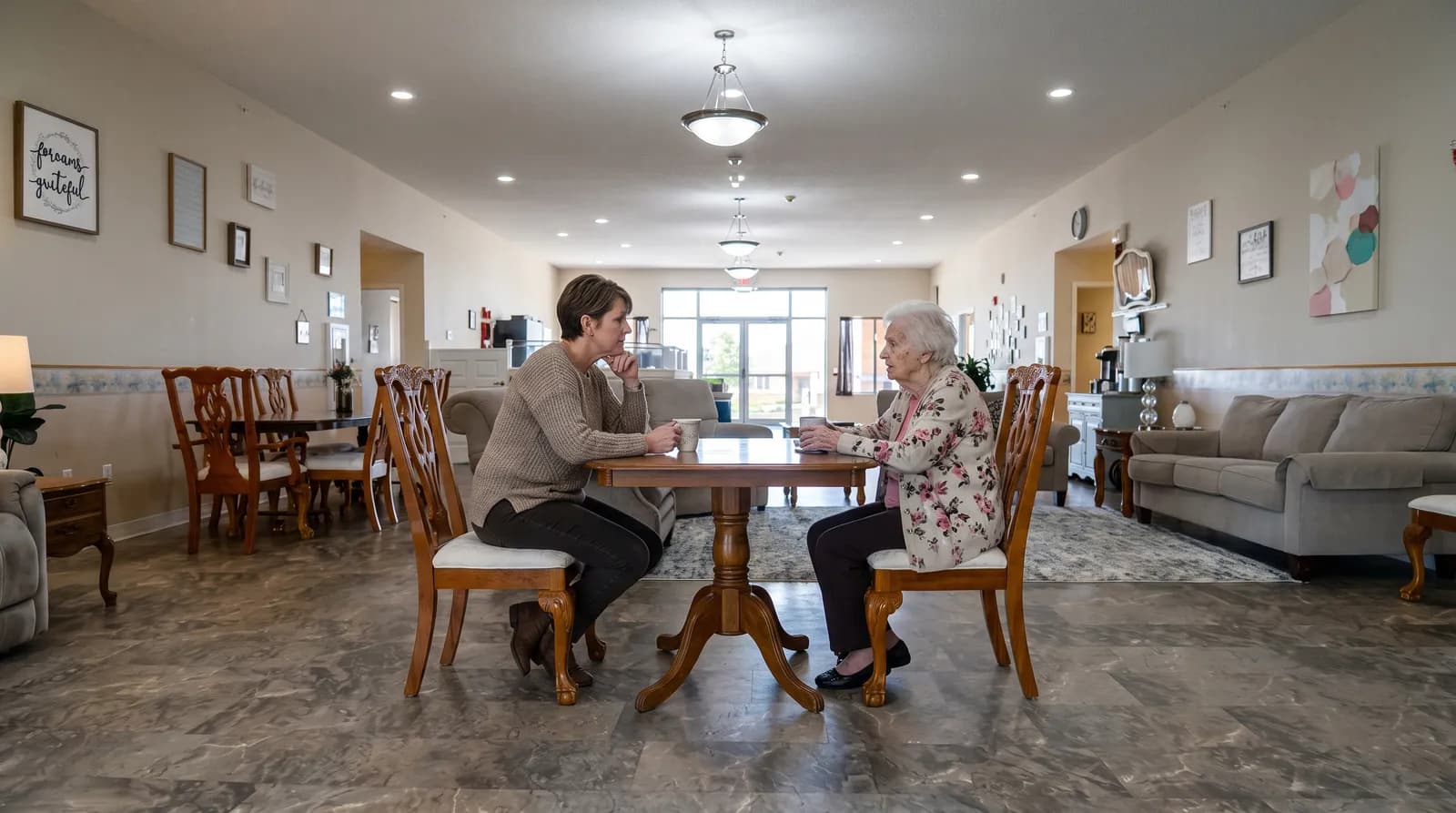
You don't have to fix anything. That's the part families need most permission to hear. When someone is on hospice, presence matters more than words, and hearing and touch are often the last senses to fade. So:
- Use your voice. Talk to her, read to her, tell her the family stories, even if she can't answer. She may still hear you.
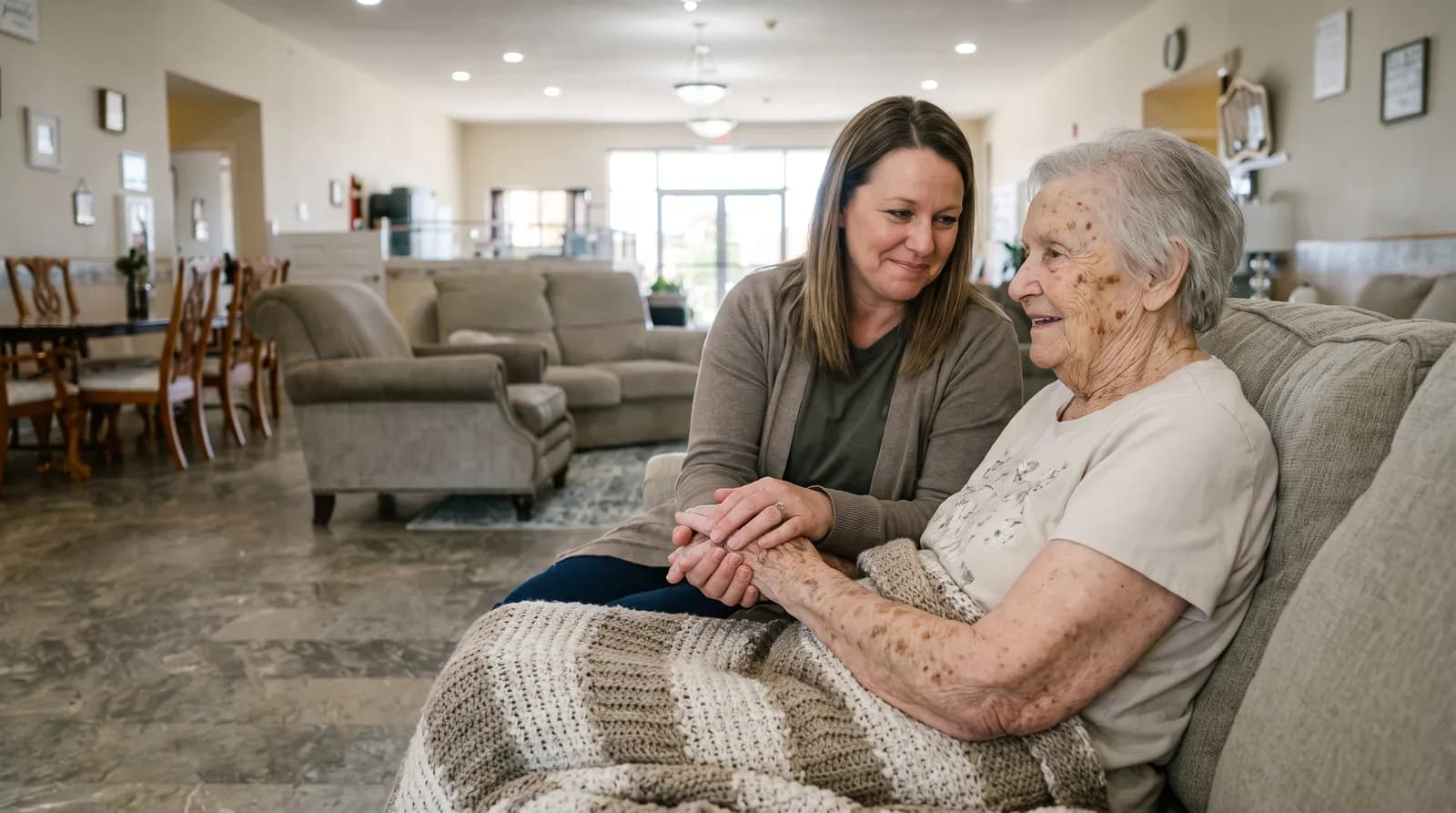
- Use touch. Hold her hand. Brush her hair. A gentle hand on the shoulder says more than any speech.
- Bring the familiar. A favorite song, a scent she loves, a soft blanket from home.
- Let there be silence. You don't have to fill every moment. Just being in the room is enough.
And take care of yourself through this. Anticipatory grief (mourning someone while they're still here) is real and exhausting. Lean on your family, your own support system, and us. In our homes, we try to care for the whole family in this season, not only our resident, because you're grieving too.
You don't have to walk this alone
If you're facing this decision for a parent, please reach out. You might be choosing hospice, wondering if your mom can stay in her home, or just needing someone who's been through it to talk to. You can schedule a visit at any of our four Eastern Colorado homes in Flagler, Stratton, and Limon (our 6th Street and Circle Lane homes), or contact us if it would simply help to talk it through with a nurse first. There's no pressure here, only help.
Parul Darji, RN — Owner & Administrator, Aspen Leaf Assisted Living Residence. Serving families in Flagler, Stratton, and Limon, Colorado.
Frequently asked questions
- What does it mean when a parent goes 'on hospice'?
- It means the focus of care turns fully to comfort: keeping your parent peaceful, free of pain, and cared for, for whatever time remains. It's usually recommended when a doctor believes someone likely has about six months or less. It's a change in the focus of care, not a withdrawal of it. At Aspen Leaf, it means the same caregivers your parent already knows keep caring for them, right in their own home.
- How might my parent act differently on hospice?
- Families often notice a loved one sleeping much more, eating and drinking less, withdrawing from conversation, becoming confused or restless, or breathing differently. These changes are a normal part of the body slowing down near the end of life, not usually a sign of pain or neglect. Your parent's doctor and our nurse-led team can tell you what's expected for your parent specifically and what each change means.
- Why is my parent sleeping so much and not eating?
- As the body nears the end of life, it needs far less food and energy, and sleeping more is one of the most common changes. Pushing food or fluids can actually cause discomfort at this stage. It's one of the hardest things for families to accept, because feeding someone is how we show love. But letting the body do what it needs to do is its own act of love. Always lean on your parent's doctor and our team for guidance on what helps.
- Can my parent stay in their assisted living home during hospice?
- Often, yes. In many cases a resident can stay right in the assisted living home they know, cared for by the same familiar faces, so they never have to move to an unfamiliar place at the hardest time. Sometimes, when needs grow beyond what a home can safely provide, a higher level of care is the kinder choice. It depends on the person, and it's a decision we make together with the family and your parent's doctor.
- How can I support my parent during hospice care?
- Mostly by being there. Even when a parent sleeps most of the day or stops talking, hearing and touch often remain. So your voice, a held hand, a familiar song, or simply sitting with them matters more than anything you could say. You don't have to fix anything or fill the silence. Presence is the gift.