What Daily Life Actually Looks Like in a Small Assisted Living Home
A day in a small assisted living home runs on the residents' schedule rather than an institutional one. Here's what mornings, meals, afternoons, evenings and nights look like, and what stays your parent's choice.
By Parul Darji, RN
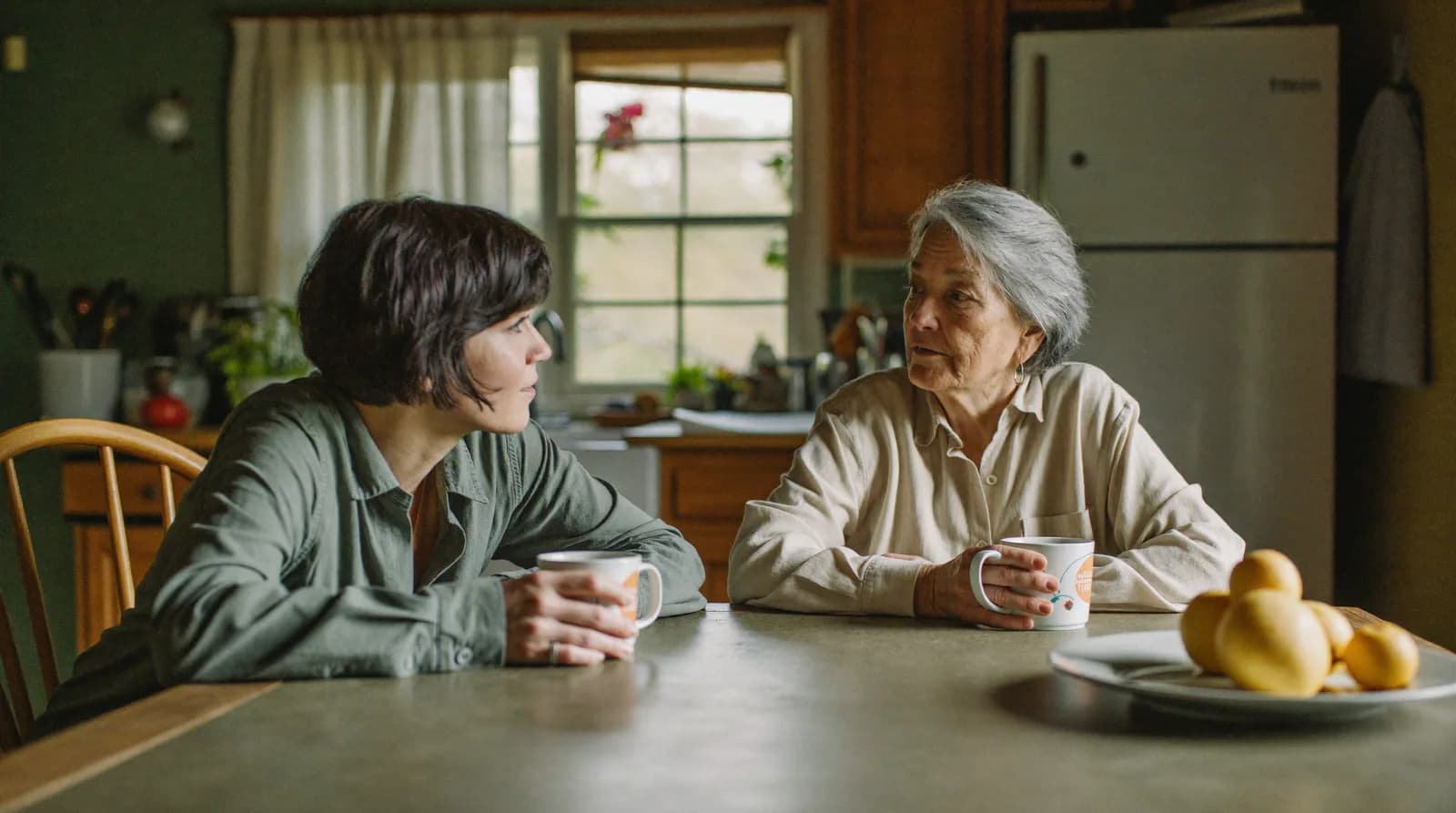
Daily life in a small assisted living home runs on your mother's schedule rather than an institutional one. She wakes when she wakes. Breakfast happens at a kitchen table, not a dining hall. Help with bathing, dressing and medications gets folded into her day rather than scheduled around a shift change. That difference, who the day belongs to, is usually the first thing families notice when they walk in, and it's easier to feel in a hallway than to describe in a brochure.
I'm Parul Darji, RN, the owner of Aspen Leaf Assisted Living Residence, and I oversee the care in our four homes in Flagler, Stratton, and Limon. Here's what an ordinary day in them actually looks like.
What happens in the morning?
There's no wake-up round. In a small home, staff know who's usually up at six and who prefers to surface at nine, and the morning simply makes room for both.
Help with bathing and dressing comes where it's needed, behind a closed door, unhurried, from a caregiver your mother sees every day and knows by name. Medications are given by QMAP-certified staff, tracked, and overseen by me as a registered nurse. What that system involves, and what to ask about it, is worth knowing before you tour anywhere.
If your father has always shaved before breakfast and read the paper after, that order survives the move. Small continuities like that do more for someone settling in than any amenity, which is a big part of why how the move itself is handled matters as much as where it lands.
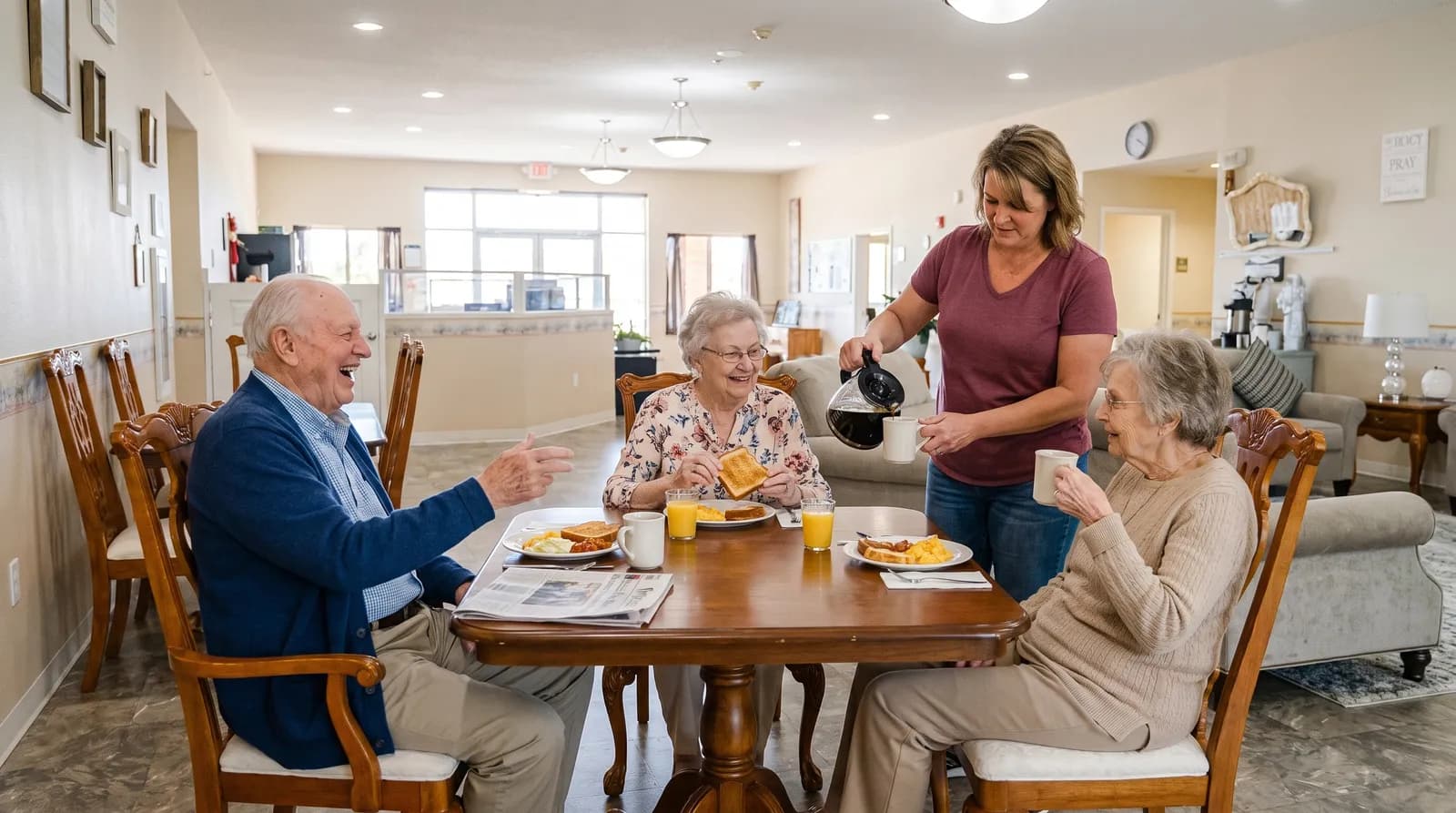
Breakfast is at a table, with other people, and it's a real meal.
What do meals look like?
Like meals, rather than food service. Residents have three home-cooked meals a day, served family-style, with snacks and drinks always available. Sitting down with other residents at a kitchen table is a very different experience from a dining room with an assigned seating time: quieter, slower, and much easier to join a conversation in.
That matters more than it sounds. For someone who's been eating alone at home for a year or two, company at mealtimes is often the change families see first, ahead of anything to do with care. As a nurse, I'd add that the table is also the most reliable place to notice that something has changed, like appetite, mood, swallowing, or energy, because the same people are sitting there every day.
What happens in the afternoons?
Whatever your parent wants to happen.
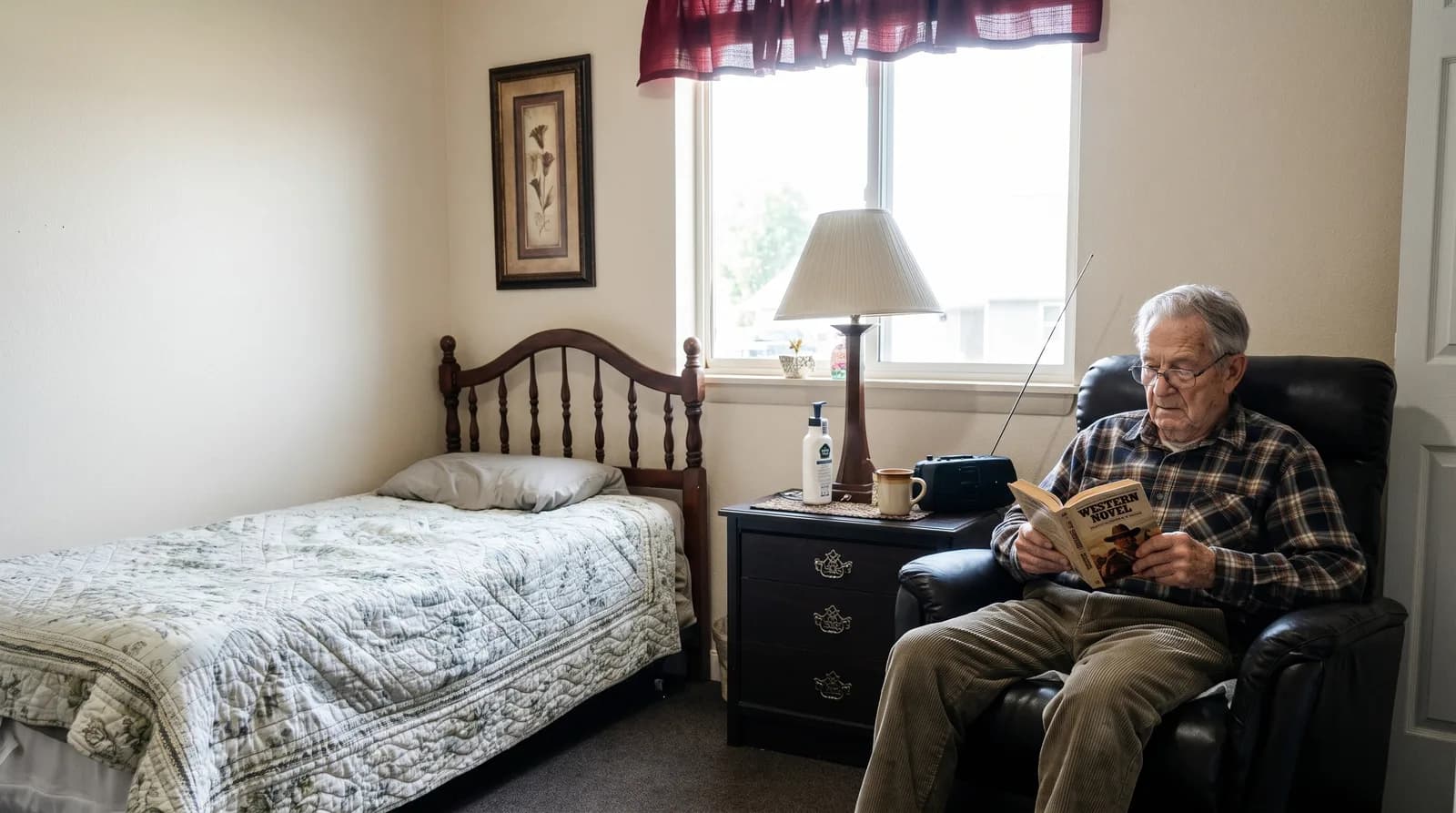
Some afternoons are a card game or a craft. Some are a visit, or time outside once the weather turns good. At Stratton and 6th Street, some are a beauty-shop appointment without a trip into town. And some are a nap and a book, which is a completely legitimate way to spend an afternoon, and nobody will make anyone feel otherwise.
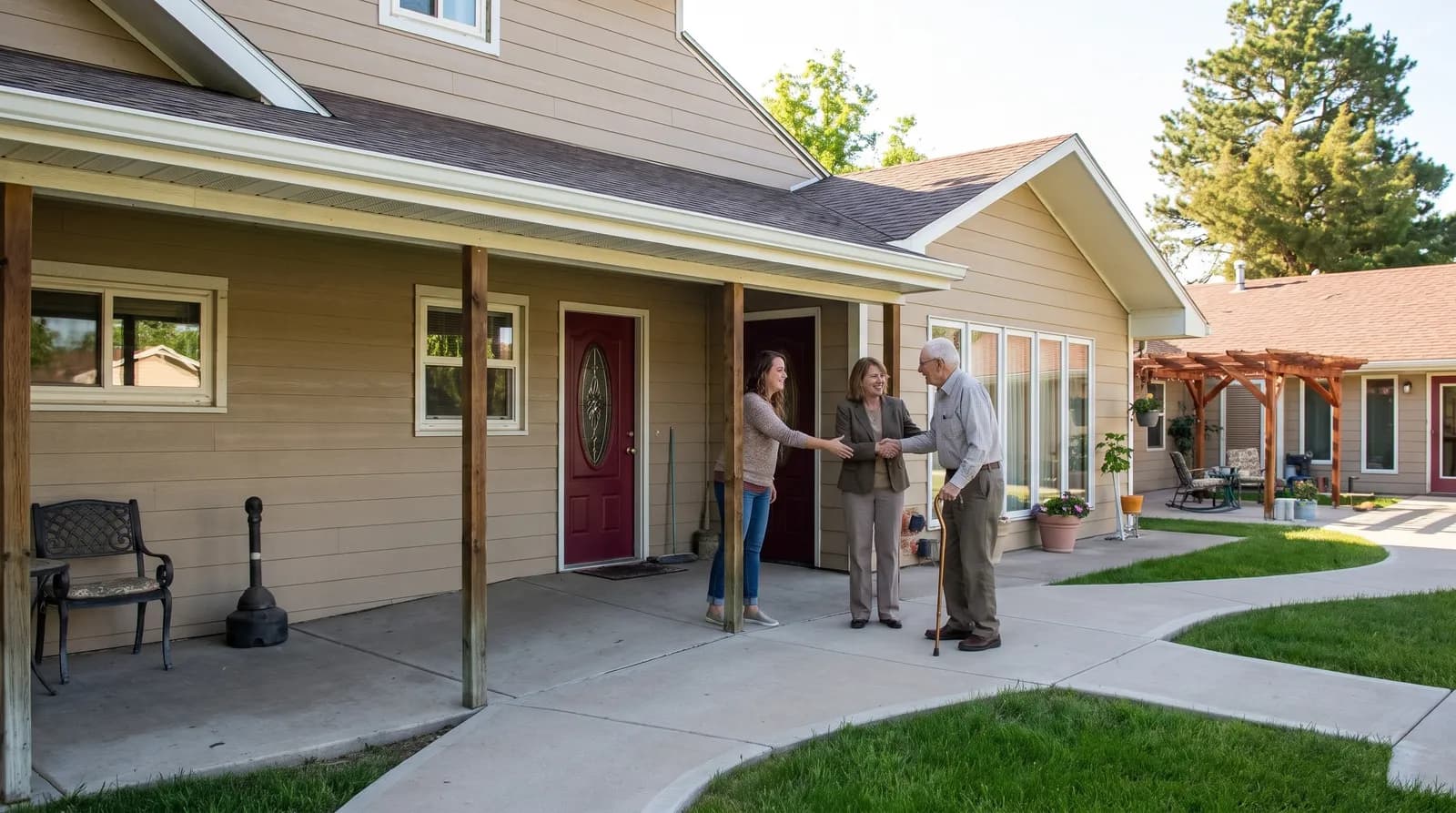
The homes really are different from each other here, and it's worth choosing on this. In Limon, 6th Street is the larger, more sociable of our two homes, with an activity room, a dedicated space for worship, and large shared living and dining rooms, which suits someone who likes life going on around them. Circle Lane, less than half a mile away, is the quietest of our four, on a calm residential street with far less coming and going. Flagler sits on a quiet neighborhood street, with a courtyard and raised garden beds under a covered pergola. Stratton is right on Main Street, with a large covered porch and a covered patio for the good days.
What are evenings like?
Dinner, then the evening people actually want. Television in the living room for some, a phone call with the grandchildren for others, an early night for the ones who've always gone to bed early.
There are no visiting hours. We ask visitors to be respectful of the other residents, but if you drive out from Denver or Colorado Springs after work and arrive at seven, that's fine. Families sitting in the living room in the evening is what a home looks like.
What actually happens overnight?
It's the question that keeps adult children awake two hours away, and it deserves a direct answer rather than a reassuring one.
Someone is awake in the house all night, not on call. Staff check on every resident at least every two hours, and more often when someone needs it. Each resident has an emergency pendant within reach.
Ask this everywhere you tour, and listen carefully to the answer. It's one of the questions worth putting to every home you visit. "Staff on site overnight" and "staff awake overnight" are different things, and so are "we check hourly" and "we do rounds." The specifics are the answer.
How is a small assisted living home different from a large facility?
Honestly, and without running anyone down: large communities can offer things a four-home operation can't. More organized activities, more amenities on site, more residents to make friends among, and often a wider range of care levels under one roof. For some people that's genuinely the better fit, and if it is, we'll say so.
What a small home offers instead is scale. Fewer residents means the same caregivers see your mother every day rather than rotating across a large building, so a change in her, like being quieter than usual, eating less, or unsteady on a particular morning, gets noticed by someone who has a baseline for her specifically. She's known rather than covered. For families who've watched a parent become a room number somewhere, that's usually the whole decision.
What choices does a resident actually keep?
More than families expect. When she gets up and goes to bed. What she wears. Whether today is a social day or a quiet one. Whether to join the activity or skip it. What's on her walls, and which chair is hers.
Assisted living exists to take over the tasks that have become unsafe or exhausting, like medications, bathing, meals, and the house itself, precisely so the rest stays hers. For the fuller picture of what this kind of care does and doesn't include, what is assisted living covers it, and the signs families notice first covers how families arrive at the question.
When you want to see an ordinary day for yourself, schedule a visit. A weekday is the most honest look you'll get.
Parul Darji, RN — Owner & Administrator, Aspen Leaf Assisted Living Residence. Serving families in Flagler, Stratton, and Limon, Colorado.
Frequently asked questions
- What does a typical day look like in assisted living?
- In a small residential home, the day runs on the residents' schedule rather than a facility timetable. Your mother gets up when she wakes, has breakfast at a kitchen table rather than in a dining hall, spends the day as she chooses (visiting, reading, sitting outside, or joining whatever is happening), and goes to bed when she's tired. Help with bathing, dressing and medications is folded into that day rather than scheduled around a shift.
- Is someone awake overnight in assisted living?
- In our homes, yes. Someone is awake in the house all night, not on call. Staff check on every resident at least every two hours, more often when someone needs it, and each resident has an emergency pendant within reach. It's worth asking this at any community you tour, because the answer varies and it's the one that matters most at 2 a.m.
- What are meals like in assisted living?
- In our homes, residents have three home-cooked meals a day, served family-style, with snacks and drinks always available, and we accommodate dietary needs and preferences. Eating at a shared table with the same people each day is quieter and slower than a large dining room, and for someone who's been eating alone at home, the company is often the first change families notice.
- Can family visit anytime in assisted living?
- In our homes, yes. There are no visiting hours. We ask visitors to be respectful of the other residents, but we don't restrict when you can come, so arriving at seven in the evening after the drive from Denver or Colorado Springs is fine.