How Tours and Assessments Work, and What to Look For on Any Tour
A tour takes about thirty minutes and carries no obligation. Here's what happens on one, what an assessment is for, and what to look for on any tour you take, including the questions worth asking everywhere.
By Parul Darji, RN
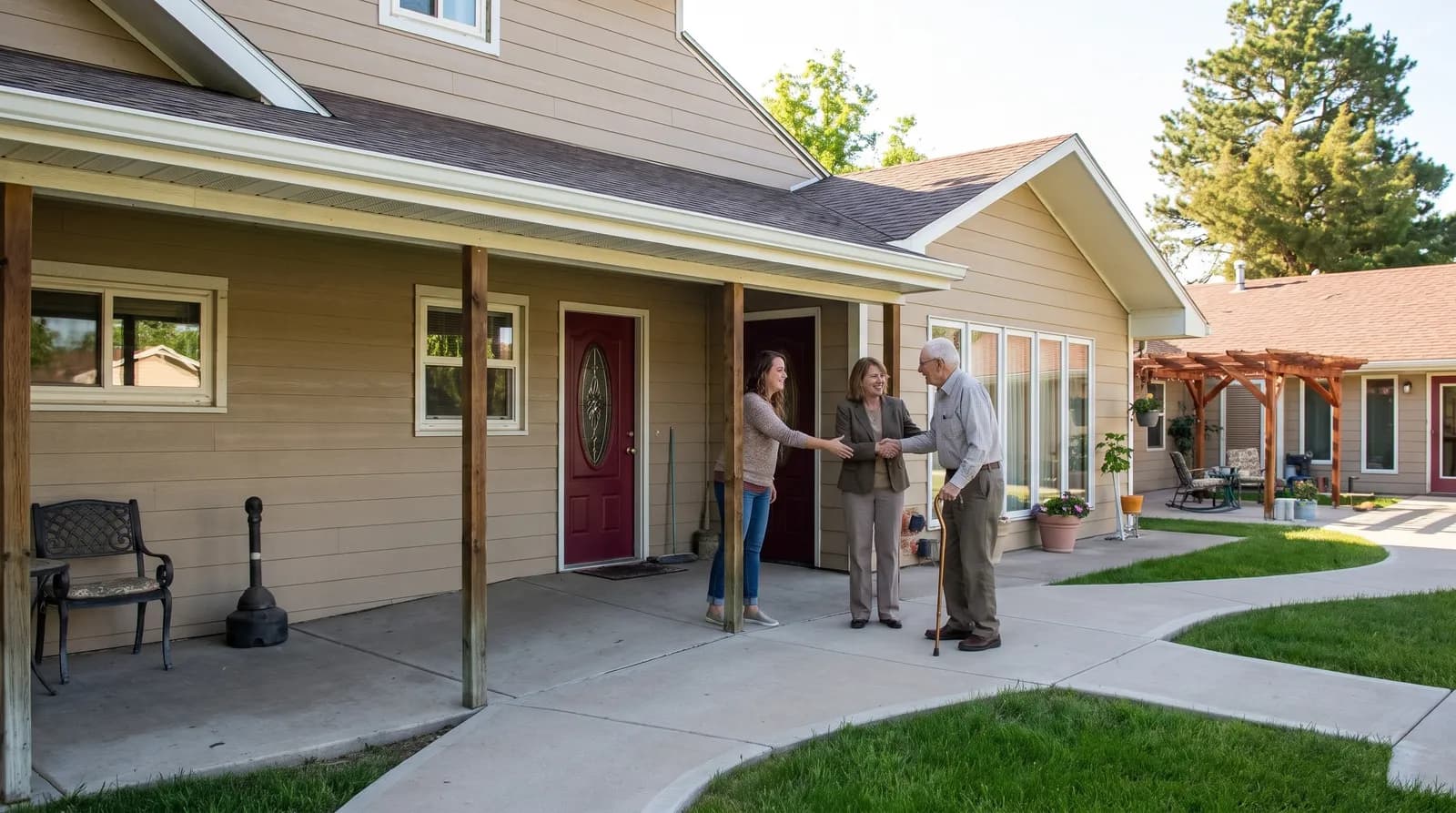
A tour of an assisted living home takes about thirty minutes, carries no obligation, and you're allowed to leave thinking "not yet." An assessment is a conversation about what your parent needs day to day, and its main job is to catch the moves that were never going to work. Neither one should feel like a sales appointment, and if either does, that tells you something too.
I'm Parul Darji. I'm a registered nurse, and I own Aspen Leaf's four small homes in Flagler, Stratton, and Limon. I'd rather a family tour three places and choose well than tour one and wonder, so I've written this to be useful even if you never visit us. The checklist in the middle works for any community, anywhere.
What actually happens on an assisted living tour?
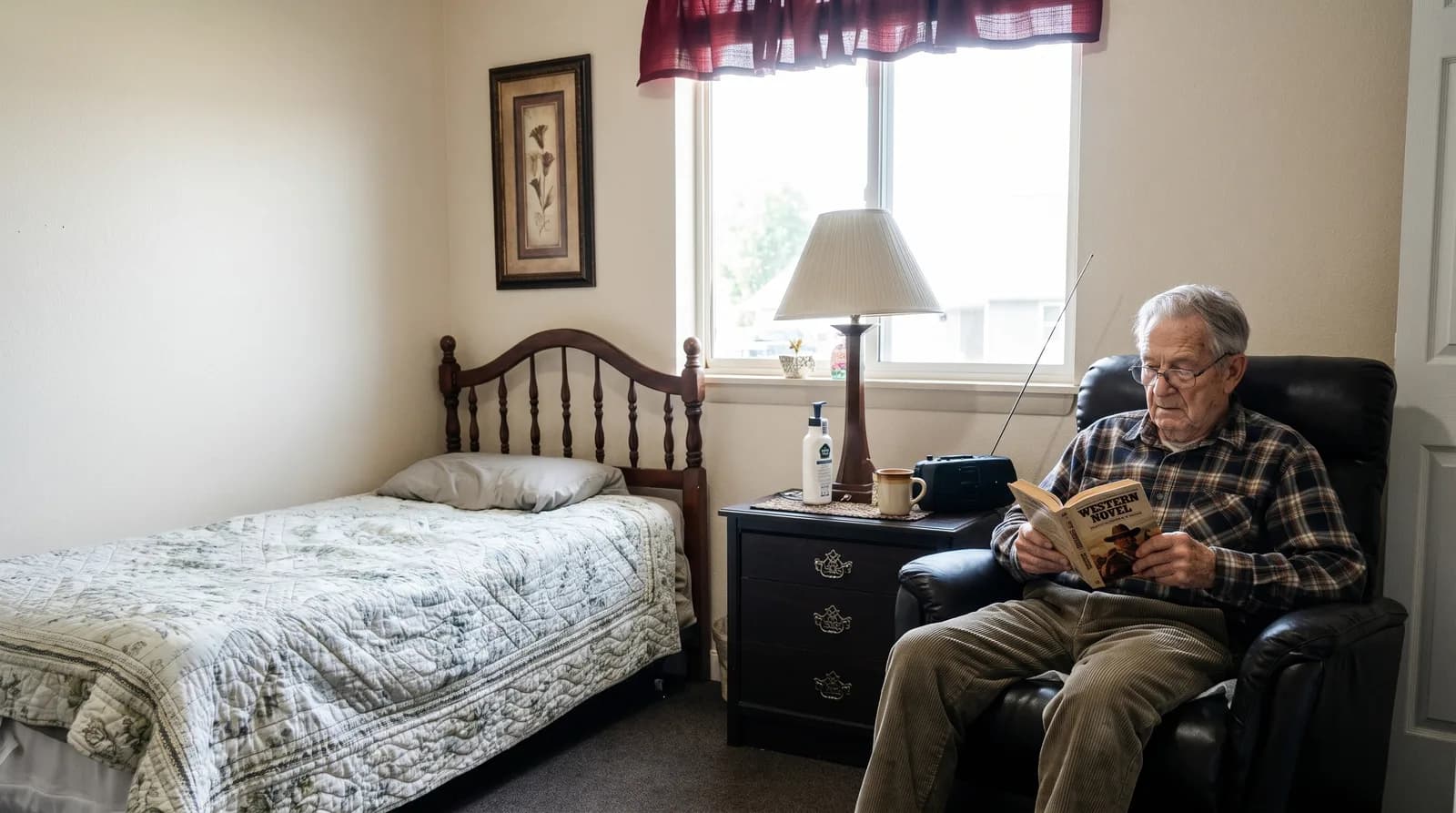
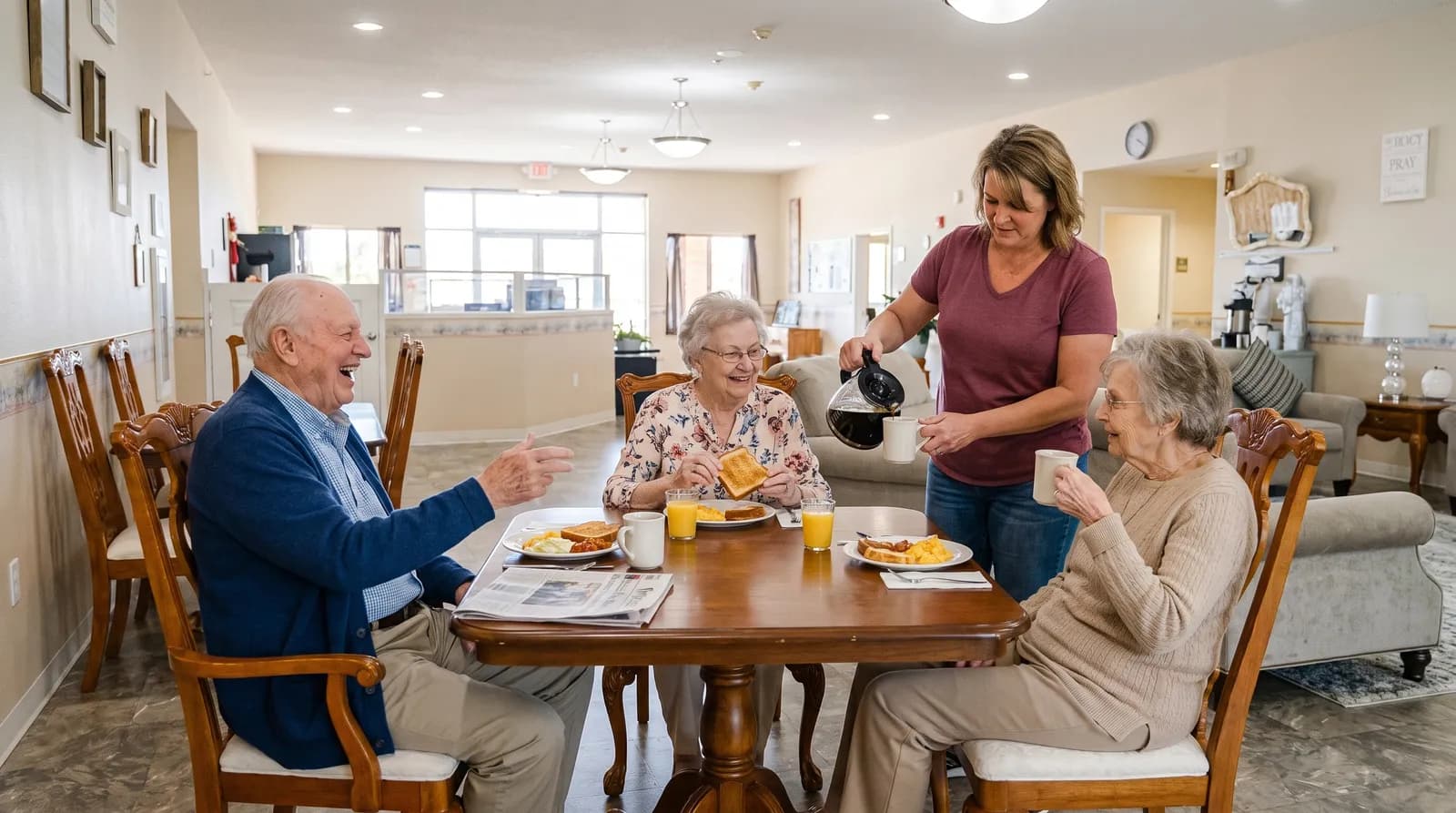
You walk through the house. You see the resident rooms and the shared spaces where the day actually happens, and you meet the caregivers and residents who are there, which tells you more than meeting a manager ever will.
Then you ask your questions. Most families arrive with three and leave having asked fifteen, and that's exactly what the half hour is for. Part of the visit is also a conversation about your parent: what's going on now, what help they need, and what worries you most.
There's no paperwork on a tour and nothing to sign. Bring your parent if that feels right, or come alone first and bring them on a second visit. Plenty of families do it that way, and there's nothing wrong with wanting to see a place before you introduce it as a possibility.
A weekday visit, mid-morning or mid-afternoon, tells you more than a scheduled weekend showing. You want to see the house running the way it actually runs.
What is an assessment, and why does it matter?
An assessment is how a home learns what your parent needs day to day: how they get around, what medications they take, what help they need with bathing and dressing, how their memory is doing, and their health history.
It's easy to read that as a hurdle. It's closer to a protection, and it protects your family more than it protects the home. An assessment is what surfaces a mismatch before a move rather than six weeks after it: when someone needs skilled nursing rather than assisted living, when a medical need goes beyond what an assisted living home can safely support, or when memory care would be the better setting.
In our homes, our care team goes over your parent's medical history before the move and talks through their preferences and routines, because that's what their care plan is built from. I oversee every resident's care, and when a family's answers raise questions about fit, I take a closer look before anything else happens. Where it's the right call, I'll refer you to a setting that suits your parent better. A home that's willing to tell you no before a move is showing you how it will behave after one.
What should you look for on any assisted living tour?
This is the part worth carrying to every community you visit, ours included.
- Watch how staff talk to residents, not to you. Do they use names? Do they come down to eye level? Does a resident interrupt a caregiver comfortably, the way you'd interrupt someone you know? How staff treat you is a performance. How they treat residents is the culture.
- Notice what you smell in the first ten seconds. A home should smell like a home: food, laundry, sometimes nothing at all. A persistent odor is a staffing problem. So is heavy air freshener, which is usually covering the same thing.
- Look at what residents are actually doing. Not whether an activity is on the calendar, but whether people are engaged. A living room where everyone is parked in front of a television at eleven in the morning tells you something a calendar can't.
- Ask who's awake at night. Not "is there staff overnight," but is someone awake, and how often is each resident checked? Those are different answers, and the difference is everything at 2 a.m.
- Ask about turnover. How long have the caregivers been there? Continuity is what lets someone notice your mother is a little off today.
- Ask what happens when needs increase. Can they handle more care in place, or is another move coming? I've written about what happens when a parent's needs change after a move, and it's worth reading before you ask.
- Ask what they can't do. Every home has limits. One that names its limits readily is being straight with you.
Take the same questions everywhere and the answers become comparable. That's the real value of touring more than one place, even when you already have a favorite.
What if you tour and it isn't right?
Then it isn't right, and that's a successful tour.
Families often arrive braced for pressure and apologize for leaving undecided. Nobody should be selling you anything about your parent's living situation. If you visit and the answer is not yet, or not here, I'd rather you knew that after thirty minutes than after a move.
That includes hearing it from us. If what your parent needs is skilled nursing, or memory care, or simply more support at home for another year, saying so is more useful to you than filling a room. I've written about the alternatives in when assisted living isn't the answer.
How many assisted living homes should you see?
Two or three is usually enough to calibrate, and one is rarely enough to trust your own judgment.
Our four homes differ enough from each other to be worth comparing directly: Flagler on a quiet neighborhood street, Stratton on Main Street, and in Limon the more spacious 6th Street home and the quieter Circle Lane. Families who walk through two of them usually know within minutes which one suits their parent.
If you're still figuring out whether it's time at all, the signs families notice first is the better place to start. If you already know, daily life in a small home shows what an ordinary day looks like, and what moving in involves covers the steps after a yes. When you're ready, schedule a visit.
Parul Darji, RN — Owner & Administrator, Aspen Leaf Assisted Living Residence. Serving families in Flagler, Stratton, and Limon, Colorado.
Frequently asked questions
- What happens on an assisted living tour?
- A tour usually takes about thirty minutes. You walk through the home, see the rooms and the shared spaces, meet the caregivers and residents who are there that day, and ask whatever you came to ask. There's no obligation and nothing to sign, and leaving thinking 'not yet' is a completely normal outcome. Weekday visits are the most useful, because you see the home running as it actually runs.
- What is an assisted living assessment for?
- It's how a home learns what your parent needs day to day, such as help getting around, medications, bathing and dressing, memory, and health history, so it can say honestly whether it can meet those needs and build a care plan around them. It protects your family more than it protects the home, because it's what catches a move that was never going to work before it happens.
- What should I look for on an assisted living tour?
- Watch how staff talk to residents rather than to you, notice what the home smells like in the first few seconds, and look at what residents are actually doing. Then ask who is awake overnight and how often each resident is checked, how long the caregivers have been there, what happens when needs increase, and what the home can't do. Asking every home the same questions is what makes the answers comparable.
- How many assisted living homes should we tour?
- Two or three is usually enough to calibrate, and one is rarely enough to trust your own judgment. Seeing more than one, even when you already have a favorite, is what shows you what good looks like.