Moving In: What the Process Actually Looks Like
From deciding yes to actually settled: the conversation about care, the paperwork in plain terms, choosing a home, what to bring, move-in day itself, and what the first thirty days really feel like.
By Parul Darji, RN
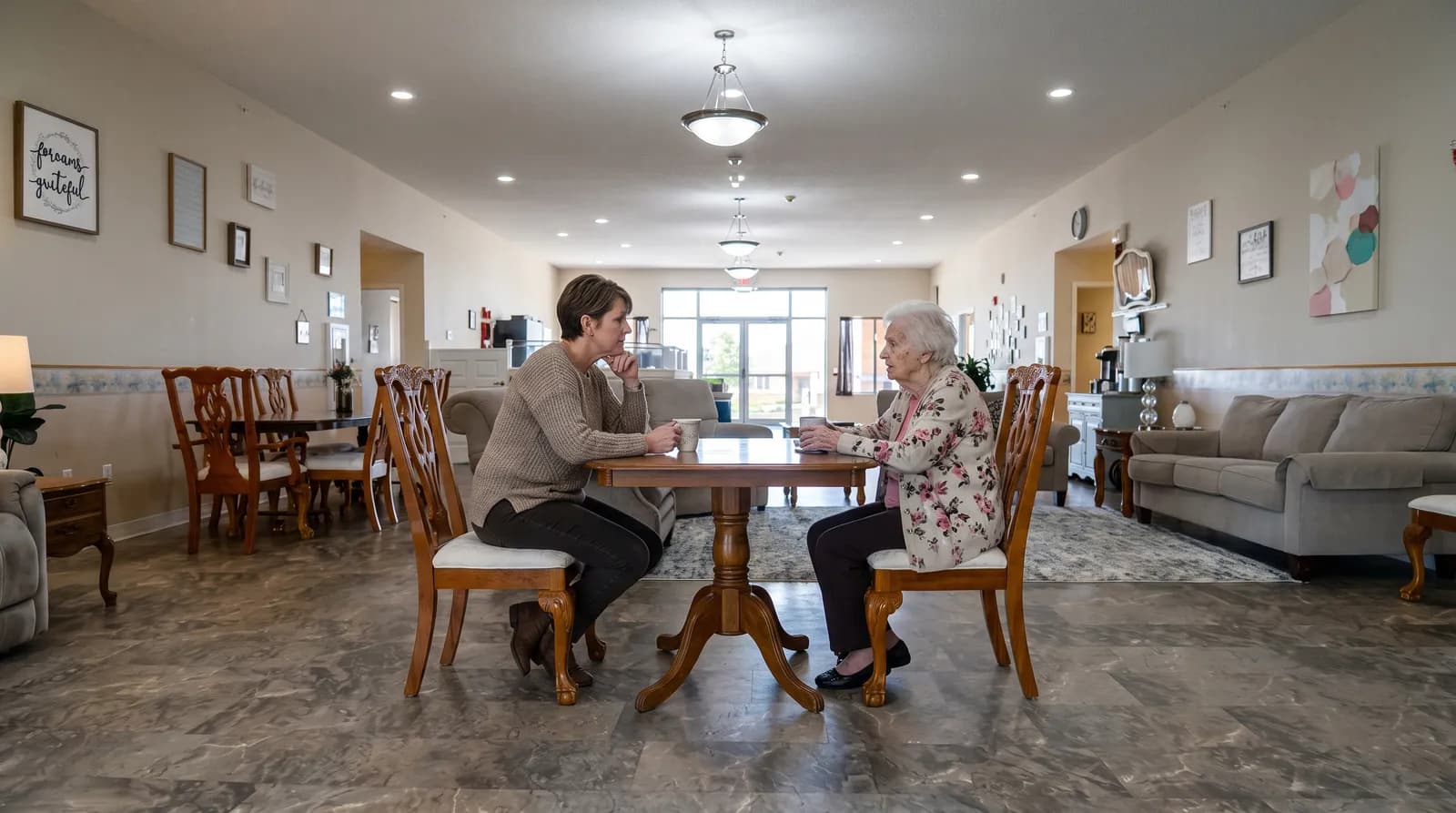
Moving a parent into assisted living usually runs in four steps: talking through what they need, the paperwork, choosing a home and setting up the room, and move-in day itself. The part nobody prepares families for is what comes after: the first month, which is an adjustment for everyone, including you.
I'm Parul Darji, a registered nurse and the owner of Aspen Leaf Assisted Living Residence. I oversee the care of every resident in our four homes in Flagler, Stratton, and Limon, and this is how a move into one of them actually goes, step by step.
What happens between deciding and moving in?
First, we talk through what your mother needs day to day. How she gets around, what medications she takes, what help she needs with bathing and dressing, how her memory is doing, and her health history. Before the move, our care team goes over her medical history and talks through her preferences and routines, because that's what her care plan is built from. When the answers raise questions about fit, I take a closer look, and how tours and assessments work explains why that step protects your family more than it protects us.
Then the paperwork. In plain terms, it covers three things: the care agreement, which sets out what care is provided and on what terms; medical and medication information, so nothing gets missed on day one; and the practical details, like emergency contacts, who may be told what, and the preferences that matter. Bring your parent's medication list, insurance and benefit information, physician contacts, and any legal documents that govern decision-making, such as a power of attorney or advance directive. If a document is missing, tell us early rather than waiting on it.
Then the home and the room. Which home your parent lives in is a real choice, and it's worth taking seriously.
How do you choose the right assisted living home and room?
The four homes are genuinely different, and fit matters more than square footage.
Flagler is a neighborhood home on a quiet street. Stratton sits on Main Street and has 11 private rooms, which suits someone who wants to stay at the center of a town they know. In Limon, 6th Street is the larger, more sociable of the two, with 28 private rooms, each with a full bathroom, an activity room, and large shared living and dining rooms. Circle Lane, less than half a mile away, is the quietest of the four, on a calm residential street. Flagler and Circle Lane offer both private and semi-private rooms.
Someone who has always liked company will settle faster somewhere with life going on around them. Someone who finds a busy house tiring will settle faster somewhere quiet. That one judgment does more for the first month than anything else you'll decide.
What should your parent bring?
Bring the things that make a room feel like hers rather than like a room.
- A piece of familiar furniture if it fits: a chair she's always sat in, a dresser, a small bookcase. One familiar object changes a room completely.
- Photographs, more than feels necessary. The walls do the work here.
- The quilt. Whatever the equivalent is in your family: the blanket, the afghan, the thing that's been on the bed for thirty years.
- A clock she can read and a lamp she likes. Small, unglamorous, and the things people actually miss.
- Clothes for the season, and the ones she actually wears rather than everything in the closet.
- Toiletries and personal-care items she already uses. Familiar brands matter more than you'd expect.
- Current medications in their original containers, with the list. How medication management works explains what happens with them from there.
You don't need to bring everything at once, and you shouldn't try. Rooms fill in over the first few weeks as you notice what's missing.
What does move-in day actually look like?
Shorter than families expect, and better if it's quiet.
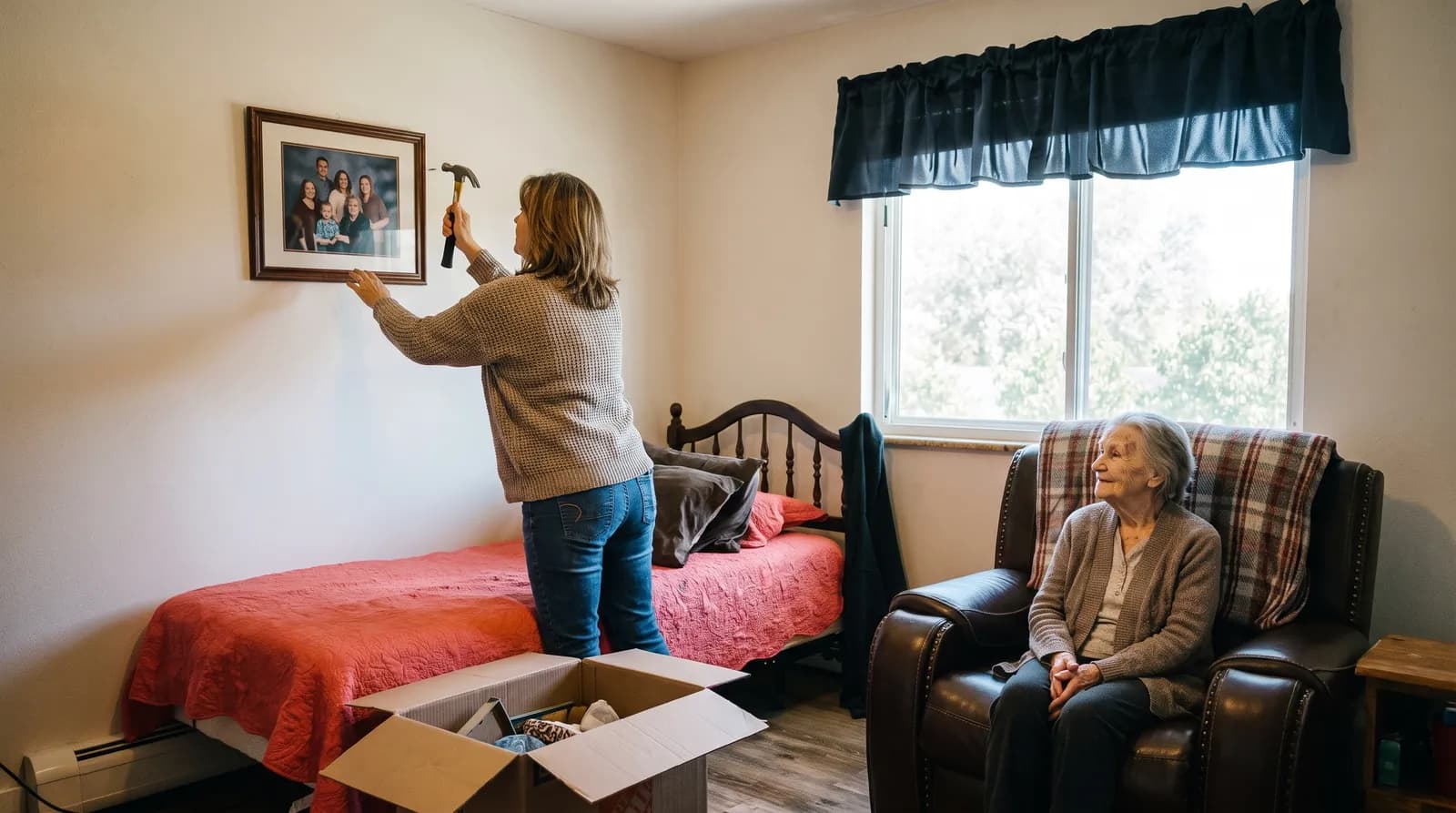
Set the room up before your parent arrives if you can: photographs on the walls, the quilt on the bed, the chair where it belongs. Walking into a room that already looks like yours is a completely different experience from walking into an empty one and being handed boxes.
Keep the day small. One or two family members, not the whole family. Arrive mid-morning rather than at the end of the day, so there's time to meet people and eat a meal in the house before evening. Our staff will introduce your mother to the other residents and to whoever is working, and go through her routine: how she takes her coffee, when she likes to get up, and what she wants help with and what she doesn't.
Then, at some point, you leave. That's the hard part, and there's no version of it that isn't.
Some families stay for dinner. Some find a shorter goodbye easier for everyone. Neither is wrong. What helps is saying clearly when you'll next be there, and then being there when you said.
What do the first thirty days really feel like?
Honestly, like an adjustment, for everyone.
The first week is often the hardest, and it's normal for it to be. Your father may be quiet, or homesick, or annoyed with you. He may also settle in within three days and leave you feeling oddly redundant. Both happen, and neither predicts the second month.
The first two weeks are when routine starts doing its work. Meals at the same table with the same people, the same caregivers each morning, a rhythm forming. This is usually when families notice small things coming back, like appetite, conversation, and sometimes weight.
By about a month, most residents have a chair they consider theirs, people they sit with, and a shape to the day. That's what settled looks like, and it rarely arrives on day three.
For you, the first month often brings guilt that catches people off guard, and relief, which can feel worse than the guilt. Relief isn't betrayal. It's what happens when a load you'd been carrying alone finally gets shared.
How does family stay in the loop?
You're not handing your parent over. You're adding people to the team.
Visit whenever you like. There are no visiting hours, and families in the living room in the evening is what a home looks like. Call and ask how the week has been. When a medication changes or something in her health shifts, expect to hear about it. On the first day, ask exactly how we'll reach you and who to call with a question, and write it down. If her needs grow later, I've written about what happens when a parent's needs change, and most of the time it doesn't mean another move.
If you're earlier in this than move-in, the signs families notice first is the better starting point, and what daily life looks like shows what your parent is actually moving into. When you're ready, schedule a visit.
Parul Darji, RN — Owner & Administrator, Aspen Leaf Assisted Living Residence. Serving families in Flagler, Stratton, and Limon, Colorado.
Frequently asked questions
- What is the process of moving a parent into assisted living?
- It usually runs in four steps: talking through what your parent needs day to day so the care plan fits, the paperwork covering the care agreement and medical and medication information, choosing a home and setting up the room, and move-in day itself. The most useful thing you can do is set the room up before your parent arrives, so they walk into somewhere that already looks like theirs rather than an empty room.
- What should my parent bring to assisted living?
- Bring the things that make a room feel like theirs: a familiar chair or dresser if it fits, photographs, the quilt or blanket they've always used, a clock they can read, and whatever sits on the nightstand at home. Add clothes for the season, toiletries, and current medications in their original containers. What matters isn't the quantity. It's that the room looks like theirs the moment they walk in.
- How long does it take to adjust to assisted living?
- Usually about a month. The first week is often the hardest, the first two weeks are when routine starts doing its work, and by about a month most residents have a chair they consider theirs, people they sit with, and a shape to the day. Some settle in within three days, and a hard first week doesn't predict the second month.
- How does family stay involved after a move to assisted living?
- Visit whenever you like, since there are no visiting hours, call to ask how the week has been, and expect to hear from the home when a medication changes or something in your parent's health shifts. On the first day, ask exactly how the home will reach you and who to call with a question, and write it down.